
Help! I Have Pre-Speaking Nerves
)
You’re not alone!
As a veterinary surgeon turned coach, I've encountered my fair share of pre-speaking nerves. If you're reading this, chances are you've felt that familiar flutter in your stomach before addressing an audience.
Let me assure you: you're not alone, and there are things that can help you navigate this.
Throughout this post, I’ll give you some science-backed suggestions that I’ve both found helpful personally and with our Vet Empowered (http://www.vetempowered.com) community too. Remember, everyone is different - take what you need! I’ve included lots of action points.
Action Point: Take a moment to acknowledge your feelings, without judgement, if you can. Write down three specific concerns you have about speaking. We'll address these as we go along.
Understanding Pre-Speaking Nerves
It's crucial to understand that pre-speaking nerves are normal and don’t reflect your abilities. Often, we're nervous because we care deeply about the audience, our message and its impact. This caring attitude is a strength, not a weakness.
A study published in the Journal of Experimental Psychology found that reframing anxiety as excitement can improve performance. So, instead of trying to completely calm down, you could try to ask yourself, "What am I excited about sharing with my audience?" (Brooks 2014)
Action Point: List three aspects of your upcoming talk that genuinely excite you, some people find it valuable to focus on these when they feel nervous.
The Science Behind Speaking Anxiety: Your Brain on Stage
Understanding what’s happening in your body can help you navigate nerves. When you face something your brain perceives as a threat (like public speaking), your amygdala triggers a “fight or flight” response.
But here's the good news: you can influence and regulate this response.
Deep, gentle breathing activates your parasympathetic nervous system, promoting a sense of calm and effectively dialling this response down. Grounding exercises can help you feel more present and less overwhelmed. If you’re at London Vet Show, go and chill out in the Wellbeing Zone - https://london.vetshow.com/wellbeing-zone-2024.
Action Point: Practise this quick grounding technique: Name 5 things you can see, 4 things you can touch, 3 things you can hear, 2 things you can smell, and 1 thing you can taste.
Many people find value in breathwork exercises, for example box breathing. Headspace has an awesome, 3minute explainer video just here: https://youtu.be/a7uQXDkxEtM?si=FqmhvdaMmJGgDbeD.
Crafting Your Pre-Speaking Routine: Finding What Works for You
Just as elite athletes have pre-game routines, speakers can benefit from pre-speaking rituals. Some people need quiet time to gather their thoughts, while others prefer to listen to music or a short, guided meditation. The key is to find what works for you.
In my experience, a combination of physical movement (to release nervous energy) and a few moments of quiet reflection works wonders for me. I also like to remind myself of my 'why' – the reason I'm passionate about my topic.
The cool thing is that you get to figure out what works for you. It can be valuable to reflect on what has helped you when you’ve felt nervous previously.
Action Point: Create a simple pre-speaking routine. Write down 3-5 steps that help you feel centred and prepared. Give this routine permission to evolve as you add new things to it.
The Power of Self-Compassion in Public Speaking
Self-compassion is a powerful tool for managing speaking anxiety (amongst many other things in life - I’m a big fan). Research by Dr. Kristin Neff shows that self-compassion can reduce anxiety and improve performance under pressure (Neff 2013). Remember, everyone makes mistakes and stumbling over a word or two doesn't define your entire presentation; you’re the only one who knows what you’re ‘meant’ to say after all. Self-compassion involves treating yourself with the same kindness you’d offer a friend. Practicing it takes time but can transform your experience.
Dr. Kristin Neff, leading researcher in mindful self compassion outlines the self-compassion break here, or check out more of her work on her website:
https://self-compassion.org/exercises/exercise-2-self-compassion-break/
Action Point: Write a short, compassionate note to yourself, as if you were encouraging a friend who was nervous about speaking. Read this before your next presentation.
Body Language and Posture: Projecting Confidence from the Outside In
Your physical posture can influence your emotional state. Social psychologist Amy Cuddy's research on "power posing" suggests that adopting confident body language can make you feel more confident. Stand tall, shoulders back, and take up space. Not only will you appear more confident to your audience, but you'll likely feel more confident too.
You can watch Amy Cuddy’s TED talk here: https://youtu.be/Ks-_Mh1QhMc?si=plZJJ_IPXYuBdZSu
Action Point: Practise a "power pose" for two minutes before your next presentation. Notice how it affects your mood and confidence level.
Audience Perspective: Remember, They're On Your Side
Remember, your audience isn't there to judge you – they're there to learn from you. They want you to succeed. In fact, most people in the audience are likely relieved that they're not the ones speaking!
I often remind people, if someone comes purely to judge and critique the speaker, that’s probably not the type of person that I value compassionate and constructive feedback from anyway.
Focus on what you want your audience to take away from your talk. This shift in perspective can help reduce self-focus and anxiety.
Action Point: Write down the one key message you want your audience to remember. Make this your North Star throughout your presentation.
Making It About the Message, Not the Messenger
When we're nervous, it's easy to become overly focused on ourselves – how we look, sound, or come across. But the most impactful speakers focus on their message and its value to the audience.
In the veterinary world, we often speak about topics that can significantly impact animal welfare or our colleagues' wellbeing. Reminding yourself of the importance of your message can help shift focus away from your nerves.
Action Point: Before your next talk, write down three ways your message could positively impact your audience or the wider community.
Handling Questions with Grace: It's Okay Not to Know Everything
One common fear I speak with people about, is being asked a question they can't answer. Remember, it's perfectly acceptable to say, "That's a great question. I don't have that information right now, but I'd be happy to look into it and get back to you." This honesty can actually increase your credibility, as well as give others the option to do the same.
If you need more time to think, a useful technique is to repeat the question back. This not only gives you a moment to gather your thoughts but ensures everyone in the audience heard the question.
Remember, it’s also ok to pause and gather your thoughts before answering.
Action Point: Practise responding to challenging questions. Have a friend or colleague pose unexpected questions about your topic and practise your responses.
Embracing Imperfection: The Beauty of Authenticity
As veterinary professionals, many of us are no strangers to perfectionist tendencies. But striving for perfection in public speaking can increase anxiety and actually hinder our performance. Embrace your authentic self, including any quirks or imperfections (we all have them, and they’re often awesome!). Your audience will appreciate your genuineness, your stories and your viewpoints.
Action Point: Identify one aspect of your speaking style that you've been trying to "perfect." Consider how you might embrace it as part of your unique presentation style instead.
Conclusion: You've Got This!
Remember, feeling nervous before speaking is a sign that you care. It means you're pushing yourself out of your comfort zone, which is where growth happens. With practice, self compassion and a tweak of mindset, you can learn to channel those nerves in ways that enhance your presentation.
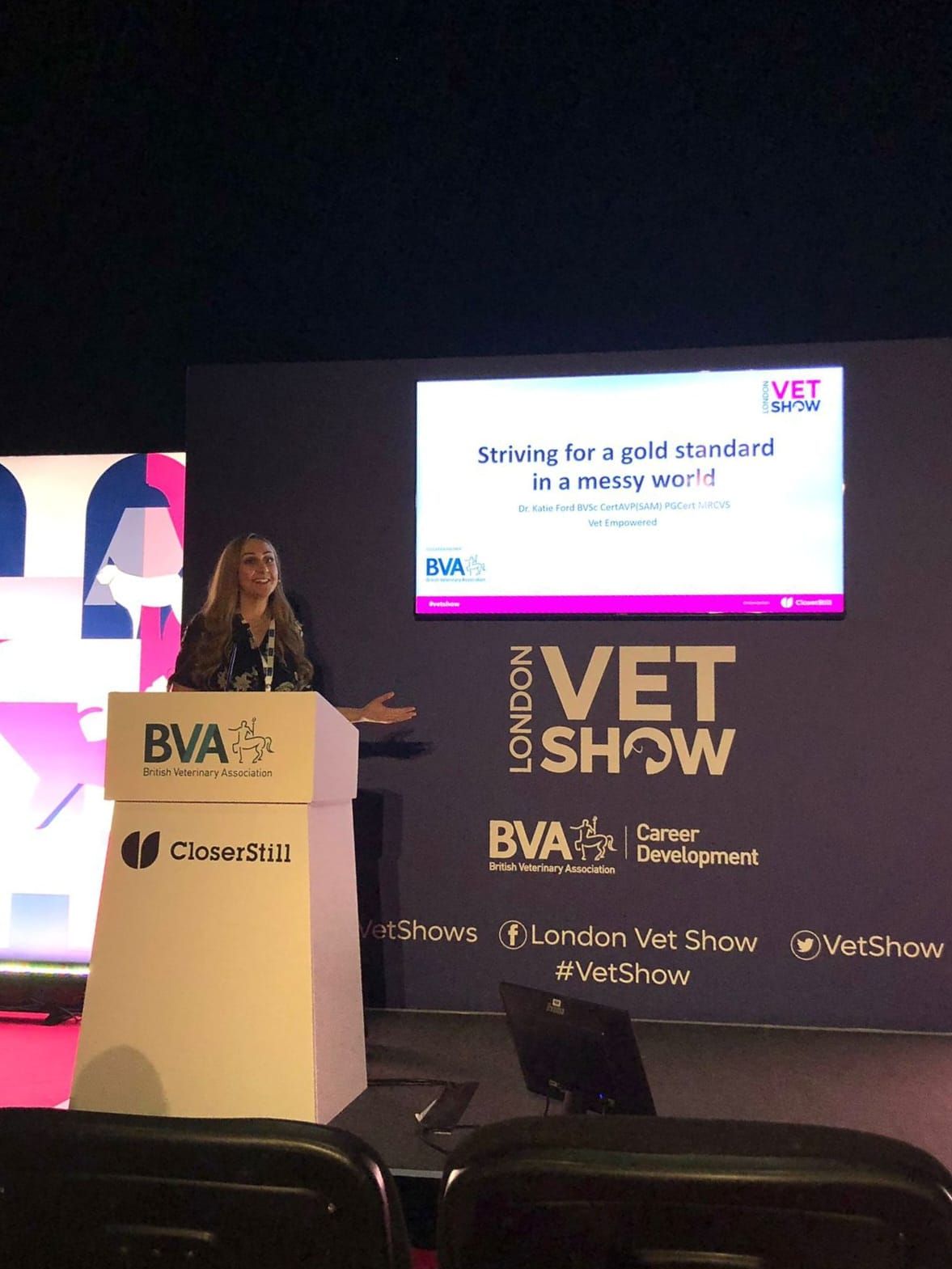
If you’re keen to get into public speaking, don’t forget to join me at the VETstagram Mastermind session on Thursday at London Vet Show. We will be discussing the barriers, questions and challenges to see how we can get more voices heard in this space!
Also, if you’d like to get in touch with the London Vet Show team about speaking opportunities at the conference, head over to the Call for Speakers page—open to all veterinary professionals: https://www.vetshow.com/call-speakers-2025
Final Action Point: Before your next presentation, read through this article again. Choose one technique that resonates with you and commit to implementing it. After your talk, reflect on how it went and what you learned. Remember, becoming a confident speaker is a journey, not a destination. Every presentation is an opportunity to grow and improve.
You've got this, and I believe in you!
References:
Brooks, A. W. (2014). Get excited: Reappraising pre-performance anxiety as excitement. Journal of Experimental Psychology: General, 143(3), 1144–1158. https://doi.org/10.1037/a0035325
Neff, K. D. (2003). Self-compassion: An alternative conceptualization of a healthy attitude toward oneself. Self and Identity, 2(2), 85–101. https://doi.org/10.1080/15298860309032
About Katie Ford
Katie Ford is a veterinary surgeon and co-founder of Vet Empowered, providing coaching and personal development resources for veterinary professionals. With an RCVS Certificate in Internal Medicine and a social media following of over 20,000 as @katiefordvet, she is a prominent voice on mental wellbeing and resilience. Katie also serves as a co-director at VetYou, focusing on financial literacy within the profession. She has completed a Masters Degree in Emotional Wellbeing, the ICF component of a Somatic Trauma-Informed Coaching qualification, and is finalising her CMI Level 7 qualification. In 2023, Katie received the RCVS Inspiration Award.
@katiefordvet
https://www.instagram.com/katiefordvet
https://www.facebook.com/katiefordvet
https://www.linkedin.com/in/katiefordvet/
About Vet Empowered
Vet Empowered is an award-winning, veterinary-led, personal development and coaching game changer, founded by Katie Ford and Claire Grigson in 2020. We have over 25years' experience in practice, and still continue to work on the ground too.
They offer the transformational Vet Empowered Signature Programme veterinary group coaching experience, workshops, 1:1 coaching and bespoke packages to boost confidence and allow individuals to thrive.
Above all, we value authenticity, compassion and energy. Vetmed needs genuine connection, and we believe in being 'real'. Their work goes way beyond the consult room, they do not care how many extra qualifications that you have - they treat you as a human.
https://www.instagram.com/vetempowered/
https://www.facebook.com/vetempowered
https://www.linkedin.com/company/vet-empowered/
https://x.com/VetEmpowered
)
)
)
)
)
)
)
)
)
)
)
)
)
)
)
)
)
)